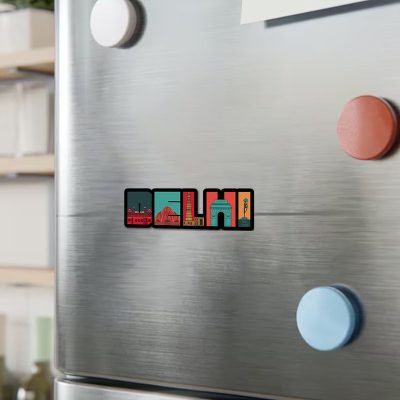
What Is a Fridge Magnet? Types, Materials & Uses
Updated:

In this article
A fridge magnet is a small decorative or useful object with a magnet fixed to its back, so it sticks to the steel door of a refrigerator. If you searched “what is fridge magnet” after spotting one at a souvenir stall or getting one as a return gift, that is the short answer: a picture, shape or message on the front, and a magnet on the back that holds it in place without glue, tape or nails.
People use fridge magnets to pin notes, show off photos and children’s drawings, collect travel memories and add colour to the kitchen. Below we explain the parts of a magnet, how it holds, the main types and materials, and how to pick the right one for your home.
The Two Parts of Every Fridge Magnet
Every fridge magnet has a face and a backing. The face is the part you see: a printed MDF cut-out, a resin figure, a clay shape, a photo print or an acrylic block. The backing is the magnet itself, which can be a thin flexible sheet, a round ceramic disc or a small but strong neodymium piece.
The two are joined with strong adhesive or, in better pieces, the magnet sits in a moulded recess so it cannot easily pop off. When you buy, turn the magnet over and check how neatly and firmly the backing is fixed. A wobbly or half-glued magnet is the most common reason a piece falls apart.
What Is Fridge Magnet Backing Made Of, and How Does It Hold?
The outer skin of most refrigerator doors is steel. Steel contains iron, which is ferromagnetic, meaning a magnet is pulled towards it. The magnet on the back of the piece pulls itself against the steel, and friction between the two surfaces stops it from sliding down. Three kinds of magnet are commonly used.
Ferrite (ceramic) magnets
These are the dark grey or black discs and blocks you see on many souvenirs. They are made from iron oxide mixed with other metal oxides, then pressed and fired. They are inexpensive, do not rust and are strong enough for most decorative magnets.
Flexible rubber magnets
Flexible magnet sheet is ferrite powder bound in a rubber-like plastic. It is magnetised in narrow alternating stripes, so most of its pull is on one side only. That is why a printed photo magnet or a calendar magnet can be paper-thin and still grip a flat door evenly.
Neodymium magnets
Neodymium, or rare-earth, magnets are far stronger for their size. A button-sized piece can hold several sheets of paper. They are used on heavier pieces and memo holders, but they need care: they can chip, can scratch glossy surfaces and are dangerous if swallowed, so keep them away from small children.
What affects holding power
- Weight of the face: a heavy resin or ceramic piece needs a stronger magnet than a light MDF one.
- Contact area: a magnet that sits flat on the door holds better than one touching at a single point.
- What is in between: every sheet of paper adds a gap and weakens the grip.
- The door itself: some stainless steel doors hold magnets weakly, and glass doors do not hold them at all.
Types of Fridge Magnets by Material
The face material decides the look, the weight and the price. These are the types you will see most often in India.
MDF and wooden magnets
MDF (medium-density fibreboard) is cut into shapes, printed with UV ink and often given a glossy coat. These magnets are light, colourful and affordable, which makes them popular for travel souvenirs, spiritual designs and return gifts. Browse our wooden and MDF fridge magnets for printed city, festival and quote designs.
Acrylic magnets
Acrylic is a clear, glass-like plastic. The printed design sits behind or inside the acrylic, which gives a glossy, slightly raised look. Acrylic is lighter and less brittle than glass, so it suits photo magnets and clean, modern designs.
Resin magnets
Resin is poured into moulds, left to harden and then hand-painted. It allows raised, detailed shapes such as monuments, temples, food and tiny scenes. See our 3D resin fridge magnets for this style. Resin pieces are heavier, so they usually carry a stronger magnet.
Clay magnets
Polymer clay and air-dry clay are shaped by hand into fruits, animals, mini pots and cute characters, then baked or dried and painted. Every piece varies slightly, which is part of the charm. Our clay and handmade fridge magnets include many of these small, playful designs.
Ceramic magnets
Ceramic magnets are made from fired and glazed clay, like small tiles or pottery. They feel solid and have a rich, shiny glaze, but they can chip or crack if dropped, so handle them gently and keep them away from the floor-level part of the door.
Rubber and flexible magnets
Here the whole piece is a flexible magnet sheet with a printed layer on top. They are thin, light and almost impossible to break, which suits photo prints, calendars, shop promotions and learning sets.
Neodymium memo magnets
Plain neodymium magnets, often set in small metal or plastic caps, are used as strong memo magnets for thick papers, menus and school notices. Treat them as tools rather than decorations, and store them out of children’s reach.
Quick comparison
| Material | Look | Weight | Best for |
|---|---|---|---|
| MDF / wood | Flat, printed, glossy or matte | Light | Souvenirs, quotes, return gifts |
| Acrylic | Clear, glassy | Light to medium | Photos, modern designs |
| Resin | Raised, detailed, hand-painted | Medium to heavy | Monuments, 3D scenes |
| Clay | Handmade, soft shapes | Light to medium | Cute and quirky designs |
| Ceramic | Glazed, pottery feel | Medium | Traditional and artisan pieces |
| Flexible rubber | Thin, printed | Very light | Photos, calendars, learning sets |
| Neodymium | Plain, small | Light but very strong | Holding thick papers |
What Are Fridge Magnets Used For?
- Notes and reminders: shopping lists, bills, school timetables and important numbers.
- Photos: family pictures and polaroid-style prints. Our photo and customised fridge magnets turn your own picture into a magnet.
- Travel memories: many people buy one magnet from every city they visit. See our travel and souvenir fridge magnets.
- Gifts and return gifts: they are light, inexpensive and easy to post. Our fridge magnet gift sets come ready to give.
- Learning: alphabet, number and map magnets help young children learn, with an adult beside them.
- Kitchen decor: a small group of themed magnets brightens a plain door.
- Function: bottle openers, hooks and clips with a magnet backing.
Fridge magnets also work on steel almirahs, metal doors, whiteboards with a steel face and magnetic boards, so you can display them even where there is no fridge.
How to Choose the Right Fridge Magnet
- Check your surface. Hold any magnet against the front and sides of your fridge. If it slides, choose lighter pieces or put up a magnetic board.
- Match the magnet to the job. For holding paper, pick a flat magnet with good contact. For display only, a 3D resin or clay piece works well.
- Look at the size. Most decorative magnets are between 5 and 8 cm across. Smaller pieces suit a big collection; larger ones stand out on their own.
- Think about who lives at home. With babies or toddlers around, avoid small pieces and loose parts, and keep all magnets on the upper half of the door. Magnets are a choking hazard and are not for children under 3.
- Set a budget. Printed MDF and flexible magnets are the most affordable, and you will find plenty among our fridge magnets under ₹100. Hand-painted resin and custom photo pieces cost a little more.
Caring for Your Fridge Magnets
Wipe magnets with a dry or slightly damp soft cloth, and never soak MDF or clay pieces. Lift magnets off the door instead of sliding them, which avoids scratches on both the magnet and the fridge. Keep them away from the stove and direct sunlight, as heat can soften resin and fade prints over time.
If a backing comes loose, clean both surfaces and re-fix it with a strong craft glue or two-part epoxy, then leave it to cure for a full day. Keep strong neodymium magnets away from cards with magnetic stripes.
That covers the basics of what is fridge magnet made of, how it holds and how to look after it.
Ready to start or grow a collection? Browse all fridge magnets. Orders of ₹499 and above ship free across India, and Cash on Delivery is available at checkout.
FAQs
What is fridge magnet made of?
Most fridge magnets have two parts: a decorative face made of MDF, acrylic, resin, clay, ceramic or printed paper, and a magnet on the back made of ferrite, flexible rubber magnet sheet or neodymium.
Why do fridge magnets stick to the fridge?
The outer skin of most fridge doors is steel, which contains iron. Magnets are attracted to iron, and friction between the magnet and the door stops it from sliding down.
Which type of fridge magnet is the most durable?
Flexible rubber and MDF magnets are very hard to break. Resin is sturdy but can chip if dropped, while ceramic and glass are the most fragile.
Do fridge magnets damage the fridge?
Ordinary decorative magnets do not affect how a refrigerator cools. Dust trapped under a magnet, or sliding a strong magnet across the door, can scratch the finish, so keep the door clean and lift magnets off.
Can I use fridge magnets without a fridge?
Yes. They stick to steel almirahs, metal doors, steel-faced whiteboards and magnetic boards made for displaying magnets.